
'In India, managers and the leadership almost glorify overworking.'

Neo banks, along with mid-sized banks, are establishing global capability centres (GCCs) in India, mirroring the expansion strategies of larger global counterparts. This trend is being seen as the next major wave in the country's banking, financial services, and insurance (BFSI) sector.

While the capital spending is being maintained at 3.1 per cent of the GDP, a little more would have boosted economic growth even further, suggests Rajiv Memani.

'It has also outlived its initial purpose of reducing physical gold imports.'

With the rapid evolution of channels like quick-commerce and the emergence of ONDC, the Indian retail industry is 'cautiously optimistic' for 2025, in which new-age technologies such as AI and automation will play a crucial role, driving efficiency and personalisation.

If Rakesh Sharma represented the dreams of a nascent India looking outward, Shubhanshu Shukla embodies a confident India reaching for the controls.
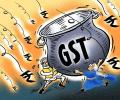
GST collections in July rose 10.3 per cent to over Rs 1.82 lakh crore, mainly driven by domestic transactions in goods and services, according to official data released on Thursday. This is the third-highest-ever monthly collection recorded since the indirect tax regime was rolled out 7 years ago on July 1, 2017. According to the data, total refunds stood at Rs 16,283 crore in July.

Fraudsters lure individuals with false promises of recovering bonuses or maturity proceeds from lapsed policies.

South Indian filmmakers have kept their focus on the single-screen cinemagoer. They have kept their finger on the pulse of the single-screen cinema fan, who goes to movies once a month or more, to forget his weekly chores, explains Ambi Parameswaran.

In a development that may encourage increased investment in commercial real estate, the Supreme Court on Thursday gave the industry relief by permitting input tax credit (ITC) on construction expenses for buildings meant to be leased. "If the construction of a building was essential for carrying out the activity of supplying services, such as renting or giving on lease or other transactions in respect of the building or a part thereof, which are covered by clauses (2) and (5) of Schedule II of the CGST (Central Goods and Services Tax) Act, the building could be held to be a plant," said Justice Abhay S Oka and Justice Sanjay Karol.
Goods and Services Tax (GST) collection rose 12.6 per cent Y-o-Y to an all-time high of about Rs 2.37 lakh crore in April, which the government said shows resilience of the Indian economy and the effectiveness of cooperative federalism. The gross GST mop-up was Rs 2.10 lakh crore in April 2024 -- the second highest collection ever since GST was rolled out on July 1, 2017. The net mop-up was Rs 1.92 lakh crore.

India currently performs around 6,00,000 to 7,00,000 laser-assisted in situ keratomileusis (Lasik) and refractive procedures a year, and the uptake is accelerating.

The finance minister clarified that indexation benefits offered until April 1, 2001 would be protected. This means older properties, including legacy assets, would benefit.

Using the debt-to-GDP ratio as a fiscal anchor aligns with efforts to promote fiscal transparency through proper disclosure of off-budget borrowings.

With Donald Trump all set to become US president, Indian exporters may face high customs duties for goods like automobiles, textiles and pharmaceuticals if the new US administration decides to pursue the 'America First' agenda, opined trade experts. Experts also said that Trump could also tighten H-1B visa rules, impacting costs and growth for Indian IT firms. Over 80 per cent of India's IT export earnings come from the US, making it vulnerable to changes in visa policies.

Clearly, some of the bullishness of the early days has gone missing. Ola's market share is slipping amid rising competition from incumbents like Bajaj Auto and TVS.

Investors recognise India's market growth

The Securities and Exchange Board of India (Sebi), in a circular dated April 11, 2025, warned investors about rising fraud and manipulation linked to the securities market on social media platforms.
What are the five things that need to be looked at to ensure a seamless transition to GST?

It will be the second Budget of the Modi 3.0 government and eighth straight Budget for Nirmala Sitharaman, rare in Indian polity.

The 2014 survey, which polled 502 global executives from companies with international presence, showed the majority of respondents were considering increasing their presence in India.

'Any finality in such matters requires political views. We will review it closer to the full Budget.'

Gross GST collections rose by 9.1 per cent to about Rs 1.84 lakh crore in February, boosted by domestic consumption and indicating potential economic revival. As per the official data released on Saturday, on a gross basis, mop up from Central GST stood at Rs 35,204 crore, State GST at Rs 43,704 crore, Integrated GST at Rs 90,870 crore and compensation cess of Rs 13,868 crore.

The government is contemplating changes to the Insolvency and Bankruptcy Code (IBC) to deal with environmental claims and liabilities of defaulting companies to make the law future-ready and meet climate action goals, sources told Business Standard. Currently, the IBC has various categories of claims and creditors, including those related to environmental liabilities.

Domains spoofing the legitimate Olympics Web site, while fake mobile apps masquerading as transport, booking, or other planning apps are also certain to be leveraged by fraudsters during the event, cybersecurity firms say, which puts Indian users also at risk.

Dubai-based billionaire BR Shetty has sued Bank of Baroda (BoB) and audit firm Ernst & Young (EY) in a New York court, accusing them of ignoring fictitious and fraudulent transactions that resulted in NMC Healthcare going bankrupt. Shetty is seeking $8 billion in damages in the suit that also names the top management of NMC Healthcare, and Netherlands-based Credit Europe Bank. A top NMC Healthcare official confirmed the development to Business Standard and said despite several meetings, senior BoB officials in India did not take remedial steps for fear of getting involved in an international ponzi scheme perpetrated by then senior management officials.

"There is a limit when it comes to tolerating abusive behaviour or working styles. Many (employees) find ways to quit," says career coach and rediffGURU Pradeep Pramanik.

India witnessed 22 initial public offers worth over $2.5 billion in the first three months of 2021 amid "high momentum" in the country's capital markets and the trend is likely to stay bullish in the current quarter also, according to a report. Leading consultancy EY India's IPO (Initial Public Offer) report released on Wednesday showed that consumer products and retail, diversified industrial products, automotive and transportation were the most active sectors in terms of the number of IPOs in the 2021 first quarter. The IPOs include both in the main as well as SME (Small and Medium Enterprise) markets.

He becomes 2nd Indian to win this award; N R Narayana Murthy won it in 2003.

96 per cent is being collected through TDS, advance tax, self-assessment tax, and other receipts.

Around 70 companies have received IPO clearance from markets regulator Sebi, but are waiting for election results.

Larsen & Toubro (L&T) chairman S N Subrahmanyan sparked an online outrage with his comments advocating a 90-hour work week and suggesting that employees should even give up Sundays.

The average Indian works 46.7 hours per week, surpassing even China's 46.1 hours. In some sectors, the numbers are even more staggering.

'We wouldn't have had to face all this had our national leaders taken care to select a place for Sindhis and sent us there, instead of sending us all over to settle in places where the locals didn't want us.' 'They could have partitioned Sindh and given us a Sindhi state from its two Hindu-majority districts.' 'Wasn't that the logic of Partition?'

Commerce and Industry Minister Piyush Goyal on Wednesday questioned Amazon's announcement of $1 billion investment in India, saying the US retailer was not doing any great service to the Indian economy but filling up for the losses it had suffered in the country. He said that their huge losses in India "smells of predatory pricing", which is not good for the country as it impacts crores of small retailers.
Gross GST collection grew 9 per cent to over Rs 1.87 lakh crore in October on higher revenues from domestic transactions. The Central GST collection stood at Rs 33,821 crore, State GST at Rs 41,864 crore, Integrated IGST at Rs 99,111 crore and cess at Rs 12,550 crore.
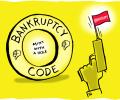
Among manufacturing companies that went to the National Company Law Tribunal (NCLT), chemicals and metal firms witnessed more resolutions while companies in the labour intensive (employment friendly) leather and textile sectors mostly get liquidated, reports Abhishek Waghmare.
In a recent clarification, the Central Board of Indirect Taxes and Customs (CBIC) provided insights into the goods and services tax (GST) treatment of transactions involving vouchers. According to the CBIC, vouchers can be categorised into two types.

Private equity (PE) activity in India between January and November 2024 recorded a total value of $30.89 billion across 1,022 deals, a 22.7 per cent increase in value and an 18.4 per cent rise in deal count compared to $25.17 billion across 863 deals during the same period in 2023. Notable large deals during the period include Walton Street India Investment Advisors at $1.5 billion, and KiranaKart Technologies at $1.35 billion.

Paytm, the country's leading fintech player which had to shut its payment bank business following regulatory action, is revisiting its business strategy including partnership with lenders. Also, the company's founder and chief executive officer (CEO) Vijay Shekhar Sharma has decided to oversee the day-to-day operations with all the major verticals reporting directly to him now. "The thing on top of everyone's agenda is getting the core businesses back on track," a person in the know said.
